|
|

Saugus, California
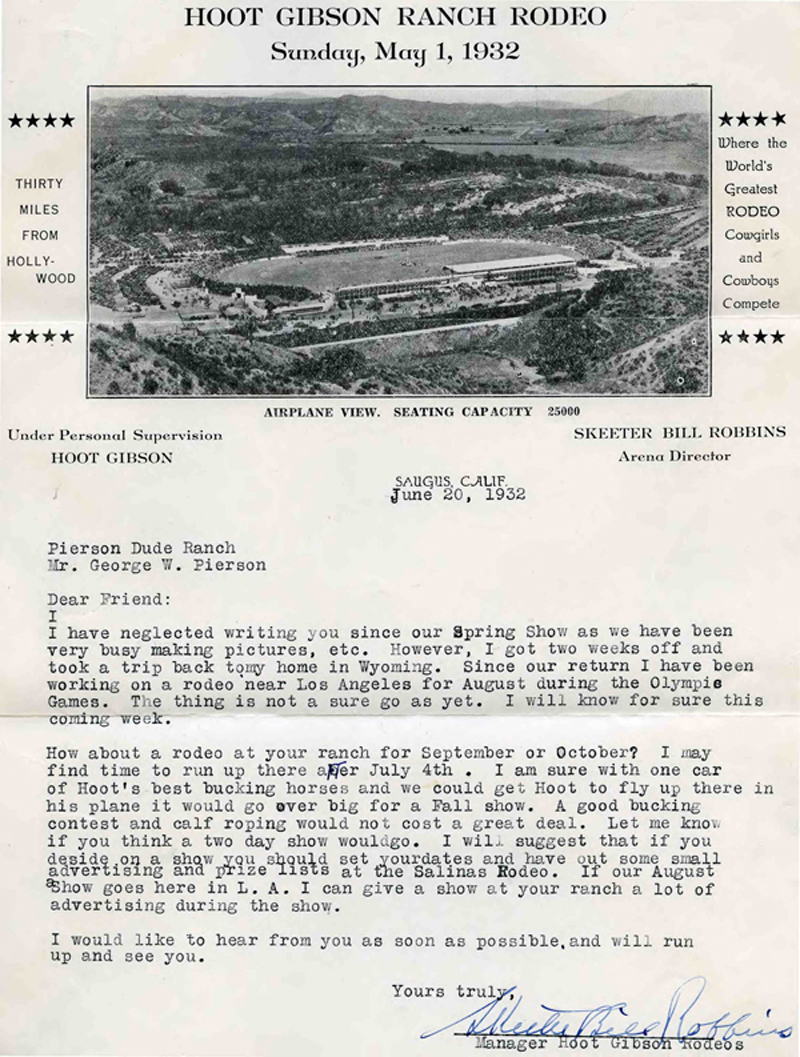
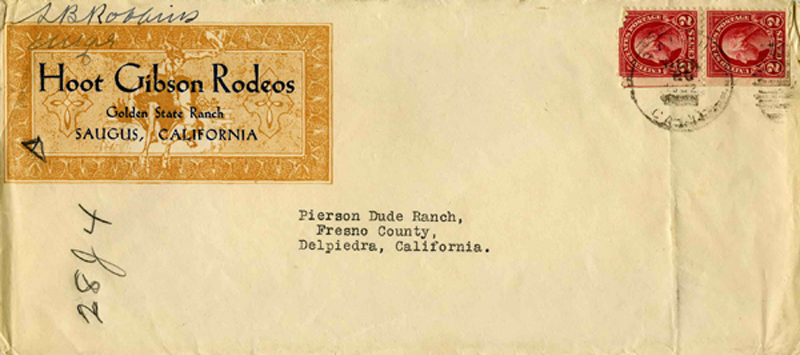
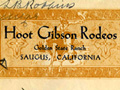
Letter, and envelope, from Hoot Gibson Ranch Rodeo, signed by Arena Director and Manager Skeeter Bill Robbins to George W. Pierson, Pierson Dude Ranch, Delpiedra, Fresno County, Calif., June 20, 1932. Text of the letter follows:
Saugus, Calif.
Pierson Dude Ranch Dear Friend: I have neglected writing you since our Spring Show as we have been very busy making pictures, etc. However, I got two weeks off and took a trip back to my home in Wyoming. Since our return I have been working on a rodeo near Los Angeles for August during the Olympic Games. The thing is not a sure go as yet. I will know for sure this coming week. How about a rodeo at your ranch for September or October? I may find time to run up there after July 4th. I am sure with one car of Hoot's best bucking horses and we could get Hoot to fly up there in his plane it would go over big for a Fall show. A good bucking contest and calf roping would not cost a great deal. Let me know if you think a two day show would go. I will suggest that if you deside (sic) on a show you should set your dates and have out some small advertising and prize lists at the Salinas Rodeo. If our August Show goes here in L.A. I can give a show at your ranch a lot of advertising during the show. I would like to hear from you as soon as possible, and will run up and see you.
Yours truly,
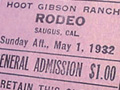
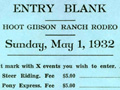
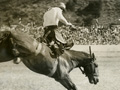
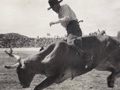
About Saugus Speedway. The future Saugus Speedway was built originally as a rodeo arena in 1927 by Roy Baker, brother of shoe magnate C.H. Baker. Roy Baker purchased the 40-acre property east of Bouquet Junction in 1923 for the purpose of breeding and selling show and pleasure horses. To that end he imported saddle brood mares from Kentucky and studded them with a pedigreed, chestnut-colored saddlebred stallion named Peavine McDonald (b. 1910), which sired five pedigreed mares and four pedigreed colts between 1920 and 1936. Baker advertised that he had 2,500 acres of grazing land and also offered training and boarding services for outside horses. Probably to attract horse buyers to his ranch in faraway Saugus, Baker staged rodeos. Some references suggest he built a 12,000-seat arena in 1924, but this is dubious. (Promoter Bob Anderson organized a local rodeo in 1924, but its exact location is unclear, and it wouldn't have had grandtands.) Anderson did hold the annual rodeo on Baker's property in April 1926. That December, Baker and Anderson started construction on a new stadium, complete with partially covered grandstand seating and a quarter-mile oval track. When it opened May 1, 1927, it seated 18,000 fans, and thousands more had to be turned away for lack of room. Over the next decade, ownership of the arena would change hands three more times. As with a majority of the American populace, Baker was hit hard financially by the Great Depression of 1929 and was forced to sell the stadium to cowboy actor Hoot Gibson in 1930. Gibson continued to hold rodeos at the stadium and drew a Hollywood crowd including famous actors such as William S. Hart, Harry Carey, Tom Mix, and John Wayne. He also used the stadium as a movie set or leased it to other companies for film making. But Gibson felt the effects of the Depression, as well. In September 1933 he appeared in a Los Angeles courtroom and pleaded poverty, saying he had no assets with which to repay a $2,500 loan. He testified that he owned a one-third interest in Hoot Gibson Inc., which owned the Saugus rodeo, and that it was in arrears. In 1934, Gibson sold the stadium to Paul Hill, owner of the Western Livestock Stockyards, who continued to call it the Hoot Gibson Rodeo. As with his predecessors, however, the stadium brought Hill financial hardship when it was hit by the Great Flood of March 2, 1938. Heavy rains that year caused a river of water to flow down Soledad Canyon and filled the ranch home and arena with mud and debris. As reported in the Los Angeles Times, the "old buildings ... collapsed during the March floods" and the arena was built anew. Nonetheless, Hill lost the ranch sometime after the April 1938 rodeo. According to Reynolds, the property was repossessed by the bank. In 1939, ownership passed to William Bonelli, and it was renamed Bonelli Stadium. Bonelli, a professor of economics at Occidental College, continued the annual rodeo tradition for a number of years but introduced auto racing in 1939 on a more frequent schedule; ultimately auto racing became the primary draw and Bonelli renamed the arena Saugus Speedway. Occasional rodeos and circuses continued until at least the late 1960s, auto racing until 1995. The facility was sometimes used for concerts before the grandstands were removed in 2012 (the originals had been replaced in 1955). The venue continues to host an outdoor swap meet.
AL3032: 19200 dpi jpeg from 300 dpi jpeg. |
NEWSREEL FOOTAGE 
Brochure
|
The site owner makes no assertions as to ownership of any original copyrights to digitized images. However, these images are intended for Personal or Research use only. Any other kind of use, including but not limited to commercial or scholarly publication in any medium or format, public exhibition, or use online or in a web site, may be subject to additional restrictions including but not limited to the copyrights held by parties other than the site owner. USERS ARE SOLELY RESPONSIBLE for determining the existence of such rights and for obtaining any permissions and/or paying associated fees necessary for the proposed use.
