"Newsmaker of the Week" is presented by the SCV Press Club and Comcast, and hosted by Signal City Editor Leon Worden. The program premieres every Wednesday at 9:30 p.m. on SCVTV Channel 20, repeating Sundays at 8:30 a.m.
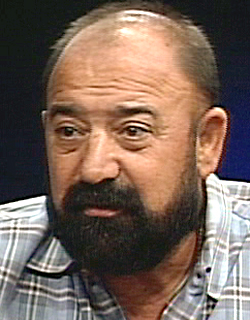
This week's newsmaker is Juan Alonso, owner of Le Chêne French Cuisine restaurant in Agua Dulce. The interview was conducted Aug. 26. Questions are paraphrased and some answers may be abbreviated for length.
Signal: With so many newcomers in Santa Clarita, there may be some who don't know where Le Chêne is.
Alonso: I hear that all the time. "It's far away. "Where is it?" It's not very far — just about 8 1/2 miles (up) Sierra Highway from Soledad. An old stone building, built in the 1920s, made famous by the movie "Duel" (by Steven) Spielberg and (starring) Dennis Weaver. Spielberg got a shot at an Oscar for the movie. So lots of people say, "Oh, that was the place." But they don't know where Le Chêne is.
Signal: How long have you been there?
Alonso: In a couple of days it will be 24 years.
Signal: Technically it's in Agua Dulce, right?
Alonso: We call it Sleepy Valley, and we are within Agua Dulce.
Signal: On Sept. 11, you'll be be doing something you've done for 13 years.
Alonso: I thought it was 14, but I'm losing count. But yes, we'll have the wine auction. The wine auction is a benefit for the (Santa Clarita Valley) Senior Center. We started out about 13 years ago, me and Jo Anne Darcy, and I guess that all those years we put all our money into the coffers of the Senior Center.
Signal: The event helps their home-delivered meals program.
Alonso: That's the main thing. I think that sometimes there might be money left over and they use it for other things, but it's primarily to visit old folks at home who are not well, sometimes who cannot cook (for) themselves, sometimes they have limited financial arrangements, and so that permits the Senior Center to deliver a meal to them.
Signal: What can people expect on Sept. 11?
Alonso: A tremendous amount of fun. That's first of all. They can expect to come with money, they will leave with a little less, because we want some of it. Seriously, they come, it's a community get-together, and often we see lots of people we see year after, and we like to see more people. We like to see everybody there because it's a great cause, it's a great day of fun, it's a great day to meet other people from the community.
We pour some wines, we serve food, we serve a nice buffet, we have a silent auction, and after lunch we have a wine auction. Gregg Lawler is the auctioneer, and I present the wines and help him with the auction, and we have lots of fun, drink a little wine, be in the shade and have fun.
Signal: What kinds of wines do you auction off?
Alonso: We auction all kinds of wines — inexpensive wines, expensive wines, champagnes. Basically, I beg. Sometimes I persuade my distributors and suppliers to give — and it's not easy. Sometimes I have to twist their arms a little bit. It's basically what other people give.
I give some wine from my wine cellar. I give some wine that I make myself. But basically all that we sell, we receive as gifts. We do not purchase anything for the wine auction. Everything is by donation.
I would like all (readers) to open their cellars or go somewhere and purchase a couple of bottles and bring them to us so I can sell them. We obviously would like them before that day, because otherwise we have to put them in the program ... but that's basically where the donations come from.
Signal: You mentioned Jo Anne Darcy, our former mayor in Santa Clarita. How did the wine auction come about?
Alonso: It was very simple. One day I was opening a couple of bottles of wine with some friends and Jo Anne happened to come to the restaurant that day. I said, "Jo Anne, come over, sit down and have a glass of wine with us." We talked, and we tasted a little wine ... and she said, "I wish I could find something to raise money for my seniors." She called them "her" seniors because she was very involved. She was a tremendous force behind the Senior Center. And I said ... "Why not a wine auction?" And that's how this whole thing started.
I've been doing this for 13 years, and some years I say, oh, it's enough, because you spend lots of energy doing this. But in the long run it has been a beautiful accomplishment. We give them — not lots of money, but lots of money over the years, and helped the Senior Center do things otherwise perhaps they cannot do.
Signal: Tell us about Juan Alonso. Where are you from and how did you get into the business of cooking?
Alonso: I tell everyone I was born in Pacoima, that's where the accent comes from. But no, I was born in Spain. When I was about 9 years old my parents moved to France and I grew up partly in Spain, partly in France. When I was about 19 years old, I moved to Switzerland and I spent some time in the army — not by choice; I was drafted. And then I lived in the Canary Islands for a while, then I went back to Switzerland and then in 1973 I came to the San Fernando Valley.
There I worked as a chef, a cook — you have no way to give orders if you're a cook. I worked in a French restaurant, and one day I came to Santa Clarita Valley. I ended up coming back and bought some land, I bought a house, then I sold some real estate for three or four years. I quit cooking, quit the restaurant business. Then I opened Le Chêne by accident.
Signal: By accident?
Alonso: It (was) truly by accident because I had no intention of opening a restaurant. The lady who owned the building, she used to buy and sell real estate through me. One day she told me the (customers) aren't there. It was an old beer bar. It was pretty hard, and she said the people who run it don't pay the rent, everything is broken, and she knew I was a cook. So she said, "Would you like to have the place?" And out of the blue, I said, "Sure."
That was 1980. I was coming back from a six-month vacation in France, Spain, Portugal, the Caribbeans, and I had a good time — I was broke. I made lots of money in 1979 in six months, but I had a great time. So 1980, the real estate (market) kind of had a — it went broke. So I borrowed some money — I tried to borrow money from some of my friends, and they became partners, and they told me that I was a little out of my mind.
I worked there two or three months, cleaned the place up, and I was going to keep it as a beer bar and (hire) a few ladies to serve beer and maybe a few items I would cook, but then I said no, that's not my style. So I decided to open up a restaurant. For a long time, I had no sign, there was no sign (saying) "grand opening," but I had no money because I borrowed $10,000 on 8-percent interest at the time. And (all the money I made) went to fixing it and I opened Sept. 8, 1980.
Signal: The building itself, the "Rock House," had been there quite some time.
Alonso: The building has been many things. There (are) a few cabins in the back and I think it was an inn, it was a Ford garage — their telephone was The Oaks No. 1. I have pictures going back to 1916 with a felt tent in the back. I think the people who moved there were from England, and they started to (establish) a roadside (stop), serving beverages, and gas, and fixing cars. They had the first tow trucks. So it is a historical monument I think.
Signal: You mentioned the movie "Duel," from 1971. Was there a bar in the building at the time?
Alonso: There was a counter for the coffee shop, beer bar, and so forth.
Signal: Was it a diner?
Alonso: It was a diner ... and in the back it was a bar, also. In the '60s, early '70s it was (run by) a lady named Cindy Ferrero .... she used to be a character, and lots of people used to come from far and wide and everybody knew her.
Lots of action has happened to those walls. ... Lots of people even come by sometimes and they think, oh, I was here, going to war, we'd camp across the street. All kinds of different stories. So lots of people know the building because of the movie, but also because Sierra Highway, before Highway 14, used to be the only highway to go to the Sierras, or they remember taking the day from Los Angeles to Palmdale or Lancaster.
Signal: Money may have been tight for you in 1980, but you managed to change the building dramatically.
Alonso: We were, at one time, forced by the county to bring the building up to standards for earthquake, seismic, all that stuff. So, slowly, we said, "Since we have to do that, we're going to do (this also)." So we changed the building inside — not too much inside; we tried to keep within the look, and the architecture was there — but lots of people drive (in) and they say, "I've been driving here 20 years and I didn't think this was here." They see the cars, but from the outside, you don't really see what is there — the building is nice, modern, gardens and so forth. So it's kind of a little secret.
Signal: But you built a whole new dining room and added a bar, as well?
Alonso: Well, the bar — we tore the whole bar down and added a bar, patio, gardens, and the dining room and so forth.
Signal: The gardens — you have koi ponds out there.
Alonso: Red fish.
Signal: It's a scenic spot in the middle of this desert area.
Alonso: Another little bit of history: We have a water wheel in the back. The water wheel used to be behind the ice cream parlor at Magic Mountain for 20 years. And they discarded it. Somebody was working on it and said, "Juan, it is a nice water wheel, and would you like one for the garden?" So I said, yeah. So some people might remember that.
Signal: So that's what happened to the old Spillikin Corners water wheel.
Alonso: Something like that. I don't know exactly where.
Signal: You own more than just the restaurant out there.
Alonso: Well, I want to say the "miracle mile" on Sierra Highway, but it's not that yet. But I have some vineyards. I own a little motel built in the 1950s up there. It's called the Sierra Pelona Motel. Next to that I have some vineyards. I have some grapes planted, I make some wine, I have my house next to the restaurant, the property adjoins.
I had to buy it because some cabins, when they got moved, the property line was going in the middle of the cabin, so when the people in the back sold the house, I said, "I think I should buy my other half of the cabin I don't own." And so I own 10 acres there, and I own another 30 acres up the street.
Signal: You've got your own label — Juan's Red, Le Chêne Special Cuvee. How many acres of grapes are you growing and what are they?
Alonso: About seven acres, and it's pretty eclectic. I like to try everything, and I have this idea to build a winery one of these days. But in (Juan's Red) you have grenache, sirah, tempranillo — that's a Spanish grape — cabernet, merlot (and two other Spanish grapes). So it's a pretty eclectic wine.
Signal: Agua Dulce Vineyards is fairly well established now; are you planning to open a boutique winery of your own?
Alonso: I'd like to do that. (It won't be) as big as theirs, because my pocketbook is a little small, but yes, that's my goal.
Signal: It took a change to a Los Angeles County ordinance banning boutique wineries for Agua Dulce Vineyards to open. People may not realize there were vineyards all over the Santa Clarita Valley 100 years ago. Why did they disappear?
Alonso: Prohibition came along.
Signal: And they never came back?
Alonso: No. Before prohibition — I do not know any wineries here in the Santa Clarita Valley by (name). But Leona Valley was full of them, and (there) still (are) some old mission grapes or zinfandels. Old grapes (are) tremendous; if you take care of them you still would get grapes. Go to the Lancaster and Palmdale area on the west side — they used to grow grapes, they used to have lots of wineries.
Los Angeles was the grape-growing region of the world before Napa, you know. Still, if you go east of Los Angeles, there still are some old wineries ... There are still old zinfandels and old grenaches ... Los Angeles used to be it — one of the largest grape producing regions in the world. But with prohibition all that stuff died.
When you're talking about making wine, I was one of those persons instrumental in changing the law with the county. Before, I guess, (a) remainder (from) prohibition, you could only make wine (on) industrial property. I think they wanted to be close to the sheriffs. Today that doesn't make sense. Anywhere in the world you go, you make the wine where it's produced. So we appealed to the county, and we were instrumental in changing the laws, so now you can make the wine where it is produced. Up to 5,000 gallons, you can do it with a (simple) review, and if you (produce) over 5,000 gallons, you have to apply for a conditional use permit. So hopefully I can do that one of these days.
Signal: Do you find that people are surprised to think wine from northern Los Angeles County could be as good as wine from Napa Valley?
Alonso: Well, from my personal experience, when I first started to plant grapes, I talked to some schools' agricultural departments ... and they told me, no, this won't be very good. And I think I've proved them wrong.
The Agua Dulce winery actually opened because they saw me planting grapes. I was planting grapes was way before they did. In the '90s they couldn't sell their land, and they said, well, this would be a good idea. That's how they started. Today there are lots of people in the county growing grapes. (There are) some grape vineyards in Bouquet Canyon; all through the Antelope Valley (there are) vineyards being planted; and around here there are people who are planting some.
Next to the Agua Dulce vineyard, a friend of mine (and) I bought a 16-acre parcel of land, have 16 acres planted, so it's coming back to Los Angeles County. And you have Rosenthal in Malibu who makes wine; you have a winery in the middle of Beverly Hills who also makes wine. So the wines here can be as good as anyplace else. Today Napa Valley has the name, and they work very hard at what they do, but I think we can grow grapes here.
Agua Dulce, especially where I am, is a little microclimate; it's not any different from Paso Robles, probably even better — probably not as hot. If you got to the left side of the highway in Paso Robles you have more marine air — air coming from the sea is cooler — but on the right side of the highway it gets to 100, 110 (degrees), so I think we can make as good as wine as anybody else.
Signal: Does the climate here lend itself to growing one kind of grape over another?
Alonso: Well, I don't know if there's a climate for pinot noir or something like that, that requires a colder environment. But we can grow cabernet, merlot, tempranillo and many other grapes. I made 65 cases of white wine this year. They are Spanish varietals (and) they are very good.
Signal: What's your philosophy about wine and health? Should you have a glass wine with every meal?
Alonso: I was born in Europe. As kids, we didn't drink Coca Cola, we didn't drink sodas — we got wine and water. Water, then you color (it) with wine. I think with moderation — wine is a product; it's clean, no bacteria, no anything, and it's good for the blood, for those red cells. So I think so. Everybody should have a glass of wine with their meal. Hamburger will taste better with that, you know.
Signal: You mentioned going to work as a cook in the San Fernando Valley. Why cooking as opposed to something else?
Alonso: Well, we all have to decide what we are going to do when we grow up. I didn't care much for school, and I wanted to do something. My mother wanted me to be a tailor, and I said no, that's not for me. I thought if I went into the food business, it allows you to go anywhere you want to go, because everybody eats.
I happened to be in France, so it was French food, and French food is known all over the world. So it gave me an outlet to travel. I came here in the United States to spend three or four months, and it has been 32 years. But it gives you an outlet to go anywhere. People always need to eat, and if you fix it a little better, they'll come.
Signal: What made you think that there was a market for fine French cuisine in Agua Dulce?
Alonso: Well, I tell everybody (who asks), "Why did you stop here?" I say, well, I was driving and I ran out of gas. But I like the place, the Santa Clarita Valley. I sold real estate for three or four years, so I could see the potential. I think it has grown much more than I ever thought, because otherwise I would have bought more real estate close to town.
But ... the place had charm and had a certain character — (it) was old, decrepit, but a certain character — and I wasn't wrong. It was hard in the beginning. I worked real hard. I started with two other employees, and I used to do everything. But I wanted to have a friend of mine as a partner — he was a chef and a pastry chef — and for him to cook, and I would have done cooking and maybe do the front ... but he didn't see the potential and I went alone. I could have been wrong, but I was right. Worked hard and some success came along.
Signal: Do most of your customers come from the Santa Clarita Valley?
Alonso: Yes. Probably 80 percent of our business comes from here — 70 or 80 percent, it's hard to know, by the faces, by the people we know. But we have people come from Pasadena, from Los Angeles, Beverly Hills, Santa Monica, San Fernando Valley, Antelope Valley, Bakersfield sometimes. We have a far and wide clientele.
Signal: Location, location, location — you're making 80 percent of your customers drive seven, 10, 20 miles to get to you. There are a lot of restaurants right in the middle of Santa Clarita that last six months and they're gone.
Alonso: There are a couple of things. .. We pride ourselves to be consistent at what we do. We don't try to be the best today and maybe tomorrow we slack off. We try to be consistent. That shows, because people come.
For example, my wine list — my wine prices — when I go to Los Angeles, I look at some wine lists and some wine prices and I say, "My God, this too much just to look at." Otherwise you have give your wallet, and your watch, and your gold ring and all the rest. So we try to keep our prices moderate. We are not cheap by any means, but we are not expensive. And we own the real estate. We own it with the bank, of course, but we own it. We don't have to (charge) three or four dollars (more) anytime the lease is up, or when the landlord comes. ... So that gives us the room to be competitive.
Sometimes a restaurant has not been unsuccessful to some point but their charges are bigger — their overhead is bigger. If you work just to make money for somebody else and you can't take something home to feed your children, to send them to school, then something is wrong. That's what makes us have more staying power.
Signal: If your mother wanted you to be a tailor, who influenced you to pursue cooking?
Alonso: I have two cousins and they both were cooks. And my grandfather was a bar man, someone in Argentina (a) long time ago. They were my mentors. But I thought, this would probably be OK as a line of work. And I like to travel, so that was my (lightening) rod.
Signal: Do you do a lot of the cooking yourself? Who's in the kitchen?
Alonso: I am there every day. I don't always do the cooking. I have three children. I'm divorced ... when they spend a week with me, I cook for my children. But I'm out at Le Chêne everyday. I take care of the business. And the people who have been there, have been there for a long time. The manager, Michelle, has been there a long time. The cooks — 15 and 16 years. I trained them all. So it's like I'm cooking. By proxy, but I'm cooking.
Signal: What do you like to cook for yourself?
Alonso: It all depends on what day it is. If you go to the market, you see what is there, especially if you go to Farmer's Market like you have here in Newhall. You go see what is there, and then you pick. That activates your senses and says, well, we do this or we do that. So it depends on what day it is. I like everything. I like food, I like wine —
Signal: What would you serve with Juan's Red?
Alonso: Probably a good lamb chop. It would go beautiful with that. Some nice green beans, maybe some sautÈed potatoes and a good glass of wine. How does that sound? Are you coming to dinner?
Signal: If you're cooking, you bet. Describe your best day you've had at the restaurant.
Alonso: The best day? Everyday is a good day. It's hard to answer what is the best day. What do you mean by that?
Signal: What is most satisfying about what you do?
Alonso: One of the most satisfying things is when the customers come, you have a busy day, everything goes smooth, everybody leaves happy — your personnel, the people who work for you are happy, and that's a beautiful day. And we have lots of those. That's why you're there, you know. People come, they are your friends, they visit with you, they say hi, maybe you have a drink with them, and when they leave, they leave happy.
It's a nice thing about being in business, and this type of business. You have, in some businesses, where people don't know who you are. I go to town, not everybody knows who I am. And people know you, and when you talk you say, "I'm Juan from Le Chêne." Sometimes I end up calling myself "Le Chêne" because it's "Juan from Le Chêne." So that is satisfying. It's fine because you have the recognition and you make people happy.
Signal: Any crazy days in the kitchen stand out in your mind?
Alonso: The restaurant business is a very hectic business. You depend on so many cogs in the wheel; they all have to be nice and greased and no sticks in it. It is a very hard business, too. Because you have to satisfy so many different people. We serve maybe 1,500 people a week or more. You have to keep everybody happy.
Signal: And you'll have another busy day Sept. 11, both behind the scenes and in front of the scenes at the wine auction.
Alonso: It's a terrific day because we have lots of friends who come to visit us. They come for the meal, for the ambiance, and for a good cause.
See this interview in its entirety today at 8:30 a.m., and watch for another "Newsmaker of the Week" on Wednesday at 9:30 p.m. on SCVTV Channel 20, available to Comcast and Time Warner Cable subscribers throughout the Santa Clarita Valley.



 "Newsmaker of the Week" is presented by the SCV Press Club and Comcast, and hosted by Signal City Editor Leon Worden. The program premieres every Wednesday at 9:30 p.m. on SCVTV Channel 20, repeating Sundays at 8:30 a.m.