Signal: You formed Santa Clarita for Separation of Church and State in response to what?
McFarland: Well, somebody sent me an e-mail and it said, did I see the ad in The Signal? "Mayor's Prayer Breakfast." And I sort of didn't have a good feeling about it and talked to a couple people in the Democratic club and said, this doesn't sound right.
We went to the Dunamis Group Web site and we found out about their mission, what their purpose was. We started asking questions and talking to other people (about whether) this was the right thing to do or not the right thing to do.
We called a meeting; this was about two weeks ago. We had members who were not Democrats, as far as we know; we hadn't seen them at the Democratic club meetings. And somebody said we should have a name. So we came up with a name.
Signal: You're president of the local organization, Democratic Alliance for Action. So you saw the ads for the Mayor's Prayer Breakfast on May 12, and you saw red. Red-state red. You're upset at — what? That the mayor is participating in a prayer breakfast?
McFarland: Well, not participating. Lending his title.
We have (the word) "mayors." (Then we have) "mayors'," which is multiple mayors, possessive. And then we have "mayor's," which is a possessive term, and the ad says, "Mayor's Prayer Breakfast."
Signal: Mayor-apostrophe-"s".
McFarland: And in the middle is a picture of Mayor Cameron Smyth.
Signal: So the problem is an apostrophe?
McFarland: Well, the problem is him lending his support and name and picture for a non-city event. ... I don't think it is right to do. I don't think it's right to do for any private organization, and I don't think it's right to do for this evangelical Christian businessmen's group. If such an event were to take place, it should be inclusive of all religions.
I'm not against prayer. I think prayer is a good thing. People talked about this (breakfast) being inclusive, and it's not inclusive. They said, "Everybody's welcome to attend." But they didn't say, "welcome to attend and listen to evangelical Christian prayers."
Signal: What if Cameron Smyth only allowed this Christian businessmen's group to use his picture and name, and not his title?
McFarland: Fine with me.
Signal: The problem is allowing the use of the word, "mayor"?
McFarland: "Mayor" infers that it has some city connection, because that title is given to him by the City Council and ultimately the people of Santa Clarita who elected him to City Council. That event does not represent all the people of Santa Clarita. It represents a small minority.
Signal: OK, what about this: The current mayor pro-tem, Laurene Weste, is in line to be mayor next year. She's a big animal lover. Let's say she's mayor and some private organization — completely unrelated to the city of Santa Clarita — wants to hold a dog show and she allows the organization to call it the "Mayor's Dog Show." Is that a problem?
McFarland: I don't know.
Signal: How is it different from Cameron Smyth lending the title, "mayor," to the Mayor's Prayer Breakfast?
McFarland: Well, if it's a dog show and it's inclusive to the whole community and it is a community event, it might be acceptable. This event wasn't.
This event was put on by a group that has a particular mission: to convert people to their way of religious thinking. And I don't think the community of Santa Clarita, the city of Santa Clarita, should be promoting that event. A lot of people thought that it was an open community event, open for everybody to participate it in.
Signal: Was it not?
McFarland: It was not. Everybody could come and hear them preach their Christian prayers. And what used to be called the Presidential Prayer Breakfast is now called the National Prayer Breakfast. ... They have people from all different faiths come and preach there.
The whole issue of "prayer breakfast" had a lot of people up in arms around the country. And doing some research on the Internet, I found a couple of cities where the mayors refused to attend because they weren't inclusive. They were put on by, coincidentally, Christian businessmen's groups, and they have an agenda, I think. And I don't think it's a community agenda. It's either a religious agenda or it's a political agenda. It's hard to tell with this group, because the leaders of this group are also leaders of the California Republican Assembly.
Signal: A volunteer group of the California Republican Party.
McFarland: Right. A club.
Signal: So they happen to be Republican — just like you, the founder of Santa Clarita for Separation of Church and State, happen to be a Democrat. Let's go back to the dog show. What about someone who hates dogs and wouldn't go to a dog show? Isn't that exclusive?
McFarland: Well, dog shows don't take people and separate them. And I think by highlighting one particular Christian organization, you are neglecting others. If you don't include everybody, then you're neglecting somebody.
Signal: Do you think Jews were made to feel unwelcome?
McFarland: Well, any Jews who wanted to come and hear people proselytize Jesus, sure, they're welcome. They want converts. They want anybody to be a convert. Sure, they're welcome, but why would they want to go? Many Jews — it's against their religion to hear the name of God; they will not say that. And here they're praying to God by name.
Signal: What if we had a Muslim mayor who lent his title to a "Mayor's Islamic Prayer Breakfast"? Would that be that a problem?
McFarland: Well, I think we'd have a lot of other people who would be saying it is a problem.
Signal: Would you find it offensive?
McFarland: I would. It's not right. The city should not be in the prayer breakfast business.
Signal: Because it's religion?
McFarland: And (because) it's a private organization. I called (City Manager) Ken Pulskamp and asked about other events that use the mayor's title, and there are some that are not exactly city-sponsored — blue-ribbon commission or committee on growth or something like that...
This is the only thing that the mayor lends his title to, and at the (May 10) City Council meeting the mayor talked about having this happen before, and nobody said anything. Well, that's not entirely true. I said something; several other people said something, and (former) Mayor (Jo Anne) Darcy was sent a letter from the Human Relations Forum about the non-inclusive nature of the event. So I think it wasn't honest of him to say that. Maybe he didn't know; I can't say that.
Signal: Would the city be wrong, across the board, to participate in or fund organizations just because they happen to be sponsored by a religion?
McFarland: When you say funding, I think that is illegal.
Signal: Let's put it this way: Late last year the City Council signed a $30,000-plus contract with Lutheran Social Services to provide "creative homeless services" to the city's homeless population. Is that a religious organization? Is it right for the city to hire LSS to provide homeless services on the city's behalf?
McFarland: The current definition of faith-based initiative does allow for faith-based organizations to provide services to communities. And while I'm not sure I agree with that, it is OK to do that. It's the law of the land now, that we can do that.
I think the line has to be between, are they forcing these people to convert to Lutheranism or not? And are they providing a service to the community by feeding the homeless people? I think they are.
I don't think they are demanding (homeless people) sit there and listen to prayers; I don't know. But that would be my objection — if they forced them to go to prayer (meetings) before they fed them.
Signal: The Dunamis Group isn't here today to discuss its goals or to challenge what you say about its purpose of converting people to Christianity. But do you believe there was an expectation for attendees to adopt a new religion after hearing the prayers?
McFarland: Well, part of being evangelical is attracting people to your point of view. And being neighborly, being friendly, talking to folks, inviting them into your circle, making them feel wanted and important and all that, it's a good ploy to get converts. It's also a good ploy to get political converts, and I don't know that that's not part of the issue that's going on.
There is this whole "prayer breakfast" idea that can be very divisive. And it makes people who are Democrats, who argue for separation of church and state, look like godless heathens who nobody wants to be associated with. And I think that's a plot from the Republican Party.
I don't know whether 25 years ago the Republican Party hijacked the Christian Coalition or the Christian Coalition hijacked the Republican Party, but there's been a concerted effort to make these things an issue, and it works.
Signal: Supervisor Mike Antonovich's picture was in the advertisement for the prayer breakfast, alongside Smyth's. Is it wrong for Antonovich and Smyth as individuals to exercise their right to participate in a prayer breakfast?
McFarland: No, absolutely not. (My) objection is "Mayor's Prayer Breakfast." (I was told that) Mike Antonovich talked about ... how he has gone to other events and how inclusive they were. ... Had it been that type of event, even with the mayor's title, I would have been less defensive about it.
Signal: Do you think the Dunamis Group ad was misleading? Did you look at it and think it was a city event?
McFarland: Well, it does say Santa Clarita Valley's Inaugural Mayor's Prayer Breakfast, "praying for our leaders," featured speaker Cameron Smyth right in the middle.
Signal: What would you ask the Dunamis Group to do differently if it wanted to hold another prayer breakfast in Santa Clarita?
McFarland: Call it a "community" prayer breakfast. Not use the title of mayor.
Signal: We've run letters to the editor in The Signal from people who believe there's a rigid wall between church and state. Others have noted out that there's no mention of "separation" in the Constitution; rather, the First Amendment protects the people's right to practice their own religion and bars the establishment of a state religion. What's your take?
McFarland: I think there's a lot of truth in that. I think the government is endorsing that event when they say "Mayor's Prayer Breakfast," especially this one.
Signal: The apostrophe thing — how is a "mayor's" breakfast different from a multiple "mayors'" breakfast?
McFarland: Well, they do in some communities. And I have some (news)papers here talking about other areas where mayors have bowed out of prayer breakfasts because they have not been inclusive.
I think a lot of people are intimidated, and especially in Santa Clarita, we don't have a real diverse population. If you don't go along with the flow here, you can get a lot of grief. People can make fun of you, they can tease you. If it's in school, if it's not the right religion, you're left out of certain activities. And in the Human Relations Forum, and I think in the Interfaith Council, people are trying to be inclusive, trying to make sure everybody is part of the activities. Not "these are the special people" and "these are the leftovers who are going to hell anyway."
Signal: In Santa Clarita there seems to be quite a bit of cooperation among religions and community groups. When a Jewish congregation needed more space, it met in a Catholic church. The Mormon Church hosts nondenominational Boy Scout troops. There seems to be a lot of interactivity.
McFarland: That's good.
Signal: But the city should not be part of that equation?
McFarland: No. Why should the city be involved with what the churches do? I attended Interfaith Council meetings. I was invited by one of the ministers. Also in attendance were Wade Trimmer and Joe Messina from Dunamis Group — their president and one of the members...
Their list of people here of who've they've invited (to the Mayor's Prayer Breakfast) are (Rep.) Buck McKeon, (Sen.) Tom McClintock, (Sen.) George Runner, (Assemblywoman) Audra Strickland, (Assemblywoman) Sharon Runner, all of Santa Clarita City Council, a bunch of schools. They didn't even invite any of the churches. They had no intention of this being an inclusive event...
Signal: One more time, you don't have a problem with Cameron Smyth, who happens to be the mayor, attending a prayer breakfast.
McFarland: I think he needs prayer.
Signal: Was the Mayor's Prayer Breakfast the first thing that bothered you in this way, or are there other things the city has done with religious organizations that bothered you?
McFarland: I think the schools are a big problem. I alluded to or mentioned a religious bias in schools. There's a couple of favorite religions, and people who aren't in them are ostracized and made fun of and teased. And I don't see there's a lot of effort to deter that.
Diversity is not praise; that's why we finally have a superintendent of the Hart district, I think, who is willing to deal with that. They saw that the need was so strong that they brought in somebody that maybe they didn't really want to because the diversity issue is very, very important. People need to be included, and that's what's good about Santa Clarita — it's a great community for those who are included. So we want to include everybody.
Signal: Have you participated in the Human Relations Forum?
McFarland: I was a founding member for more than 10 years. I went into Clyde Smyth's office when he was mayor, before the Human Relations Forum was started, and he warned me: We're going to have problems in Santa Clarita if we don't do something about this; I've seen the changing demographics in the schools and we need to address these issues now, so we don't have problems later.
I think not a whole lot was done. The Human Relations Forum has done a lot; individuals have done a lot; there's still a lot of work to do. And finally Hart seems to be getting on board and being willing to take somewhat of a lead or some responsibility now. And they've (created) the Ad-hoc Committee (on Racism) now. I'm very hopeful that those issues will be addressed. I think they've been swept under the rug.
Signal: What set you off? Was it your perception that Cameron Smyth was using religion for political purposes because he's planning to run for Assembly and you, a Democrat, were offended by that?
McFarland: It really was everything. I didn't expect this to have as much traction as it's had. I didn't like him using the title of mayor (for the breakfast). Had he not done that, I wouldn't probably have said anything. Then when I found out the people who are in (California Republican Assembly) are also three of the same people who are officers (in the Dunamis Group) — it seems like a great venue to solidify your base. And any Democrat who comes out against it is going to look like an awful person.
I didn't ask them. I only went by what they said and what I saw. I don't know what their real motives are. Maybe they're pure and genuine and they wanted to bring the community together. If they wanted to bring the community together, if Mayor Smyth wanted to bring the community together, he would have made sure that it was a community event that everyone was invited to participate in. Not just to come and listen to prayers.
Signal: What kinds of people are in the Separation of Church and State group with you? Are any of them religious? Are you religious?
McFarland: Many of them are religious. Some are not religious. I don't know if my religious feelings have a place here.
As far as I know — we have over 30 members, and this is in two weeks. And this is mostly just from e-mail and one meeting. ... It was just so interesting that people got so excited about it. I didn't expect that, I really didn't.
We have high school students, we have people in ROTC, we have Buddhists, we have Christians, we have at least one atheist that I know of, and we have people who believe in the separation of church and state.
(City Council members) believe there is separation between church and state. So I'm not sure why they're allowing the mayor's title to be used that way.
Signal: Why did you see a need to form a new organization, instead of just flying under he flag of the Democratic Alliance for Action?
McFarland: That's easy. Because there are a lot of people who believe in the Constitution who are Republicans or decline-to-state. They don't have to be a Democrat to believe in that.
Bringing church and state together has never worked in the past. Church-run countries have problems. They are not inclusive. The brilliance of the founders of our country was that there should not be a formal religion, and they've done many things, and the Supreme Court has upheld many things to make sure that there is separation of church and state, and I think it's important.
See this interview in its entirety today at 8:30 a.m., and watch for another "Newsmaker of the Week" on Wednesday at 9:30 p.m. on SCVTV Channel 20, available to Comcast and Time Warner Cable subscribers throughout the Santa Clarita Valley.



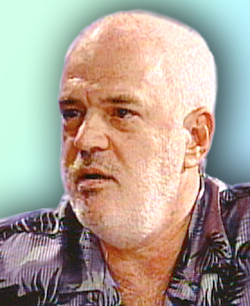 "Newsmaker of the Week" is presented by the SCV Press Club and Comcast, and hosted by Signal Multimedia Editor Leon Worden. The program premieres every Wednesday at 9:30 p.m. on SCVTV Channel 20, repeating Sundays at 8:30 a.m.