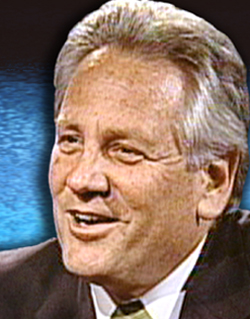
"Newsmaker of the Week" is presented by the SCV Press Club and Comcast, and hosted by Signal Multimedia Editor Leon Worden. The program premieres every Wednesday at 9:30 p.m. on SCVTV Channel 20, repeating Sundays at 8:30 a.m.
This week's newsmaker is Dr. Keith Richman, who represents the Santa Clarita Valley in the state Assembly and is seeking the Republican nomination for California Treasurer in the June 6 Republican primary election. Questions are paraphrased and answers may be abbreviated for length.
SCVTV: Why is state treasurer a political position? Doesn't the treasurer just cut the checks after the Legislature and the governor decide how to spend the money?
Richman: No, not exactly. Most people don't know what the treasurer's office does. The treasurer not only deals with investment and finance issues at the state level; insures that we are investing our money wisely; but the treasurer also sits on the California Public Employee Retirement Board — the CalPERS board — and also the teachers retirement board (CalSTRS). So the treasurer can deal with public employee pension issues and the skyrocketing costs for public employee pensions. And I plan on doing that.
Also, CalPERS is the largest purchaser of health care here in the state of California. It purchases health care on behalf of 1.3 million Californians. So the treasurer can be involved in health care issues.
Then, the treasurer sits in a number of boards and commissions that deal with infrastructure investment, the infrastructure bank, different financing authorities, dealing with investment and infrastructure. As you know, that is something I have been very interested in over the years, and will continue to be interested in: investment in our state's infrastructure for the future.
SCVTV: Health care makes sense, since you're a medical doctor; what do you know about managing money?
Richman: Before I went to the Legislature, I built an almost $100 million company, a physician practice management group. I started that company. I still maintain a relationship with it. I also started another company with my brother-in-law in Hawaii. So I have a fair amount of business experience in growing companies and understand what it takes to run a business and do business here in the state of California.
SCVTV: As a legislator, you have been interested in pension reform. Apparently a lot of cities will go broke if they don't solve their pension problems.
Richman: I think there's a good chance of that. Not just cities, but (also) counties and school districts.
I became very worried about skyrocketing pension costs a few years ago when I was working on the budget, and in fact those pension costs have skyrocketed. Back in the budget year 2000-01, the costs for state pensions — for state employees only — was about $160 million. Last year, in the budget year that ended this past June 30, the cost had grown to $2.6 billion. In fact, the projections for the next fiscal year, which starts July 1, are that it's going to cost another $250 million a year above the $2.6 billion.
The situation for local governments is just as bad. We have all read or heard about what's going in San Diego. We've heard about their mayor resigning (and) six members of their retirement board being indicted. What people may not know is that the city of San Diego is regularly discussing whether or not they ought to declare bankruptcy.
According to the treasurer in Orange County, he says that their fiscal situation is worse than before they declared bankruptcy. Orange County has $2 billion of unfunded pension liabilities, another $1.5 billion of unfunded retiree health care costs — and that's going on throughout the state.
The city of Bakersfield, up the road, is spending 17 percent of their entire general fund budget just on pension costs — not including retiree health care benefits. The same situation exists in northern California, in Contra Costa County. So it's a very important issue, probably the biggest fiscal issue that's impacting the state of California and cities and counties and school districts throughout the state.
The issue's not just pensions; the issue is that the increasing amount of money that's going to pay for public employee pensions is money that's not going to education, it's not going to higher education, or it's not going for investment in our roads or highways or other infrastructure needs.
SCVTV: How are you going to fix the problem without cutting future benefits of teachers, firefighters and police officers?
Richman: We do need to put in a new benefit structure. Right now, pension benefits here in the state of California are much higher than any other state in the nation. We have people in California who are retiring at age 50 or 55 with more than 100 percent of their salary. We need to change that.
There is a question you can ask: Why should the people in the public sector — routine government employees like accountants or managers — why should they be retiring at the age of 55? Why should they not be retiring at the age of 65 or the appropriate Social Security age? By changing the retirement age, adjusting the benefits for that and putting in pensions that are fair to the employee but also fair to the taxpayer, we can save a lot of money. Not only save money, but put in budgeting predictability and not continue to pass on literally hundreds of billions of dollars of debt to our children and grandchildren. By those savings, we can then pay down the unfunded liabilities that we have accumulated.
SCVTV: What would you, as treasurer, be able to do about it?
Richman: The treasurer sits on the CalPERS board. The treasurer can speak out about public employee pension issues. The treasurer can sponsor legislation, just like the governor can sponsor legislation, and push for reform in this very important issue.
SCVTV: You're termed out of the Assembly. Why run for treasurer and not lieutenant governor or controller or some other office?
Richman: I looked at the various statewide offices. I had made my mind up that I wanted to run for statewide office, and the treasurer was an office that involved many of the issues that I had been working on.
I'd been working on the issue of public employee pensions and the skyrocketing costs for the last number of years; I had certainly worked on health care reform issues; and as you know, I have been working on infrastructure issues from the first day I got into the Legislature.
So I'm running for treasurer largely for the same reasons I ran for the state Legislature in the first place — not only to make a positive difference for our state, but (also) to ensure that we are being fiscally responsible; that we're spending our money wisely now, so that we can invest for the future of California.
SCVTV: Assuming you get past Claude Parrish in the June 6 primary, you'll have a formidable Democratic opponent in (current Attorney General) Bill Lockyer. A recent piece in the San Francisco Chronicle said that in the race for treasurer, there are a couple of unknowns and Bill Lockyer. An April Field Poll gave Parrish a 16-13 lead over you in the GOP primary; 71 percent didn't know anything about either of you. First, how do you plan to overcome Parrish in the primary?
Richman: Let me say, I not only expect to win the primary; I expect to win the general election. We polled — and (another major poll was conducted) since the Field Poll — that showed I had a very significant lead in the race. Most people in the state were undecided, but my lead over Claude Parrish was very significant: more than 3-2. So I was obviously very pleased about that. And I expect to beat Claude in the primary and expect to win the primary on June 6.
SCVTV: You won't to have to go negative on him, then?
Richman: No. I think Claude will do enough on his own. And then I expect to win the general election. I'm not doing this (just) to win the primary.
SCVTV: Lockyer has $4 million in the bank from when he was going to run for governor—
Richman: Well let me tell you how I am going to win. Most of the time, Republicans in the state of California have a difficult time because they don't have any votes either out of Los Angeles or the Bay Area. I don't know if you remember or not, but I am the only Republican who lives in the city of Los Angeles who is elected to partisan office, other than Arnold (Schwarzenegger) — but Arnold came through the recall election.
I have pretty good name ID in Los Angeles and still have a pretty good reputation. So when you look at a statewide race, Republicans generally do very well in the Central Valley, the Bakersfield-Fresno region; they do well in the Inland Empire, San Bernardino-Riverside; they do well in Orange County. I expect to do well in all of those areas, and I expect to do well in San Diego, also. I also expect to get a significant number of votes here in the Los Angeles region and also the Bay Area.
Another article that was in the San Francisco Chronicle was their endorsement of me the other day, along with the endorsement from the Sacramento Bee, the Fresno Bee and the Riverside Press-Enterprise. When I've run — not only in my Assembly district, but (also) in the region down here when I ran for mayor in the San Fernando Valley, when the valley was going to split off from the city of Los Angeles — the San Fernando Valley is 26 percent Republican registration. Twenty-six percent. I ran against 11 other people and got 52 percent of the vote.
When I've run for the state Assembly, typically I've gotten 20 points or more, higher than Republican registration. So I am somebody who gets votes across the political spectrum. Moderate Democrats, decline-to-state, and also Republican votes.
SCVTV: You've got a reputation as a moderate, so you're probably better positioned for the general election than an extremist would be. Do you see the California Republican Party getting behind either you or Claude Parrish, going into the primary?
Richman: The party won't get involved. In a contested primary race, the party just stays out of it. I'm pretty confident I'm going to win the primary.
SCVTV: Do you have any indication that the party will come through with serious money for the winner to go up against Lockyer?
Richman: I think the party is going to come through. The party wants to not only wants to win the governor's seat again, but wants to win these down-ticket statewide races. The party is putting in a very good organization statewide to reach out to voters, to get those votes in November. I am looking forward to the party's support.
But I am going to reach across the political spectrum in November. I am going to reach for moderate Democrats and decline-to-state — those people who want common-sense solutions to the problems that we all face here in California.
SCVTV: What would be your top priorities as treasurer?
Richman: It's fiscal responsibility. It's spending our money wisely now and investing for the future. I want to address those skyrocketing pension costs. I want to put in pension reform so we put in fair pensions, not only for the employees but (also) the taxpayer.
I want to address health care reform; I want to address education to ensure we have a good education system; and I want to address investment in our state's infrastructure. So really, it's about investing for our state's future.
SCVTV: What does the future look like? Rising gas prices are bringing truckloads of gas-tax money to Sacramento, but will it last? How well positioned is the state for the next couple of years?
Richman: The revenues are very strong at the state level. In fact, for next year, the projected revenues for the state are somewhere between $95 billion and $96 billion. That compares to just a couple years ago when they were $77 billion. They have grown significantly.
But despite that really strong growth in revenues, we're still looking at a structural deficit next year. Many of us are pushing for a balanced budget. We think it's very important not to spend more than we take in on an annual basis. With these additional revenues that have come in — which we think are largely one-time revenues related to gains in the stock market and gains from the real-estate market — that we ought to use that money to pay down debt. Pay down the money to debts that we owe to schools; pay money we owe to the transportation accounts and other internal accounts that we borrowed when the state had a large deficit; and also begin to repay or pay down the debt we acquired in that deficit recovery bond, Proposition 57.
The important point is putting in a balanced budget starting July 1 and paying down debt we have accumulated. I also think it's important to address some of those unfunded liabilities that we have for retiree health-care costs.
SCVTV: What do you like about the way the governor has handled the budget?
Richman: I think he has tried to follow those principles that I just spoke about. I think he needs to be a little bit tougher on the spending issue; we need to put in a balanced budget next year. But the governor has taken steps to pay down debt, so I am happy with that. I think we need to do a little bit more of that.
SCVTV: Do you have any specific criticisms?
Richman: I think we need to move more toward a balanced budget on a operating basis to reduce the structural deficit. The structural deficit that's projected for next year is still in the range of $4 billion, so we're not out of the woods yet. Our fiscal house is not yet in order at the state level. What I would like to see is a balanced budget for next year, and use the excess revenues from this year to pay down more of the debt.
SCVTV: But ultimately the state will have to raise taxes.
Richman: I am not agreeing to that at all. When we have gone from a position, just a couple years ago, of $77 billion for the general fund (to) next year, somewhere between $95 dollars and $96 billion, that's almost a 25-percent increase in two years. The revenue growth and the tax receipts have grown much faster than the population or the cost of living.
This is not a revenue problem. We've had tremendous growth in revenues. The issue is spending. I mean, if I ask you how many people in their homes or their businesses have had a 25-percent increase in their budget in the last two years, not very many people would be able to say that they've had that.
SCVTV: Again, how long do you think these good times will last? The past five or 10 years, we've heard how California's onerous regulatory climate is driving businesses away and sending manufacturing jobs to China. How long will businesses be able to generate these higher tax revenues for Sacramento?
Richman: Let me say, that's part of the reason we need to be careful this year. Because a large part of the revenues that we have this year are related to stock market gains and companies like Google or people who made a lot of money in the real-estate market. It's important that we're prudent and not putting money into ongoing expenditures or into programs that are continually going to grow in subsequent years.
When you talk about the economy, one of the good things we did in the Legislature a couple of years ago was reform workers' compensation. Businesses are finding that their premiums for workers' compensation insurance have gone down a lot. Many businesses have seen reductions in the range of 40 or 50 percent. I know in our own business we have (seen it), and I hear from businesses every day. That has been a good thing for business.
It's also important, when I talk about investing for the future, it's about competing in a competitive global economy. We're going to need a society that's well educated, that's creative, that's innovative, that's imaginative, that can come up with new ideas, so that we in fact can compete in a global economy.
We're also going to need to invest in our state's infrastructure — roads, highways, transportation projects — so that we can move goods and people around the state. We all see the truck traffic on the 5 Freeway. That's related to goods that are coming in and out of the port down in Los Angeles and San Pedro. We have got to address these issues if California is going to remain competitive in a global economy.
SCVTV: You sponsored an initiative a few years ago that would have redirected a portion of the recent tax revenue growth to infrastructure. Now we're looking at $37 billion in new bonded indebtedness for infrastructure on the November ballot.
Richman: I did author a proposition just three years ago, Proposition 53, which would have dedicated initially 1 percent of the general fund and gradually grown to 3 percent of the general fund, for money in a pay-as-you-go fashion that would have been invested in infrastructure. That measure lost at the ballot (box).
I'm somebody who still believes that a pay-as-you-go mechanism for infrastructure investment would be a good way to do it. I also supported three of the four bonds that passed in the Legislature just a couple of weeks ago. I supported the transportation bond, which was for about $20 billion; education facilities bond for about $10 billion, which is split between K-12 education and higher education — both community colleges, CSU and UC systems; and the third bond I supported was for flood and levee control, for ensuring that the levees in the Central Valley are intact. Not only is it important for flooding, but it (also) protects the state's water supply and our water supply here in Southern California. So it's a very important issue.
I think investment in our state's infrastructure is important, along with the bonds that were passed in the Legislature. We closed the loophole on Proposition 42, the sales tax on gasoline, so the voters are going to have the opportunity to vote on closing that loophole. I think that's a very important thing so that the money that people thought was going to go to transportation is going to go to transportation and won't be able to be stolen by the state Legislature.
We also started — we took some small steps to allow for private-public partnerships here in the state of California, to enable the state in these various projects to access private capital, literally billions of dollars of private capital for infrastructure investment. Not as far as I would like to have seen, but it's a compromise.
I would urge people to vote for the transportation bond in November, the education bond, and the flood and levee bond. The bond I didn't vote for was the housing bond.
SCVTV: If you're treasurer in November and these bonds pass, you'll be responsible for making those actual investments?
Richman: The treasurer is responsible for issuing the bonds. The process for making the investments and determining which projects are going to be funded are defined in the bond measure, or are defined in processes that are already in place, like the state Transportation Improvement Program or those types of things. The process of how the money is going to be spent is very well defined in the bond. It's not defined by the treasurer.
SCVTV: What makes you better qualified than either your Republican opponent, Claude Parrish, or your eventual Democratic opponent, Bill Lockyer, to handle that sort of thing?
Richman: There are a number of things. My experience in the private sector in building a business — in fact, starting a business and building a business to almost $100 million a year — neither one of my opponents did that. So I have the experience of signing a check, on both sides of the check.
And then my experience in the Legislature: I've worked on budget issues; it was I and my bipartisan group that worked on what became Propositions 57 and 58. I took an active role in workers' compensation reform, energy reform, health care reform, and over the last few years, reform of our public employee pension system.
And I've tried to work across the aisle. I've tried to work with Gov. Schwarzenegger and leaders from both parties to solve the problems that we face here in California.
I'm not just the best qualified candidate in the primary, but also in the general (election). I've not been a lifelong politician. I'm not part of the problem. I'm part of the solution.
SCVTV: You're not an attorney like Bill Lockyer—
Richman: I'm not a attorney. I'm not somebody who has taken millions of dollars from personal injury lawyers or trail attorneys. I think when people have the opportunity to not only compare our character and our values, which are important for somebody who wants to be treasurer, but also our positions on the various issues, there is going to be a clear difference.
SCVTV: In terms of differences — Claude Parrish sits on the Franchise Tax Board; he has been treasurer of the California Republican Party; by way of educational background, he has an associates' degree from a community college. According to published reports, the only infrastructure bond he supports is the one for levees. In terms of policy issues, how else do you differ?
Richman: Well, look. Everybody here in Santa Clarita knows that we need to invest in our transportation system, whether you're talking about the 5 Freeway or the cross-valley connector. And here was a bond that is a very fiscally responsible bond. It doesn't have any pork in it. When people see what it does, and the money it's going to make available for transportation improvements, they're going to support that. I support investment in our state's infrastructure.
I am somebody who is going to look at the various problems that we face in California and speak out about them, just as I have over the years, and work to solve them. Whether you're talking about infrastructure investment, whether you're talking about ensuring we're spending our money wisely by addressing the skyrocketing costs of public employee pensions or addressing health-care reform — those are all important issues for people, and I plan on doing that.
SCVTV: There are only two measures on the June 6 ballot. One is for library bonds. Can we afford those?
Richman: We can. I support the library bonds. I think libraries are very important for communities, not just from an educational perspective, but (also) as a gathering point for communities. So I support that library bond.
SCVTV: The other one would raise taxes to fund preschool programs; people might know it as Rob Reiner's universal preschool initiative.
Richman: Whatever it's called, I oppose it. I don't support it at all.
SCVTV: Why not?
Richman: I think it's a measure that's faulty. In fact, it has bipartisan opposition. People like Senate President Pro-tem Don Perata (D-Oakland), who is the head of the Senate, he opposes it, also.
It's a measure that would institute a new tax, it would provide universal preschool, and we currently have in the state of California somewhere around 66 percent of youngsters going to preschool. We don't need to put in a universal program for preschool. People ought to have a choice. I just don't support the way this measure is written.
SCVTV: Regardless of whether it has anything directly to do with the treasurer's position, what is your position on President Bush's idea of sending National Guard troops to the U.S.-Mexico border?
Richman: I think that immigration does have importance to the treasurer's office. There is no question that immigration impacts our economy. Whether you're talking about the impact of illegal immigration or the impact of legal immigration and the need for high-tech workers in the future, I think immigration is a very important issue for the treasurer and something that I would address.
Largely, and generally speaking, I support what President Bush is proposing. What the president has proposed is using the National Guard in a temporary manner to secure our borders. He said that while we build up our Border Patrol, we're going to use the National Guard to help the Border Patrol secure our boarders.
I also support President Bush's proposal for a guest-worker program. He has proposed a very strict guest-worker program that includes an identity card with biometric identification so that it would be very difficult to have fraudulent cards. The president has also made it clear that he doesn't support amnesty; that anybody who is here illegally should be penalized and not get amnesty.
So, broadly speaking, I support what the president is proposing, and I think it is a very important issue for our economy and for the treasurer's race.
SCVTV: Whatever happens this November, you are termed out of the Assembly. Santa Clarita City Councilman Cameron Smyth hopes to replace you. Are you endorsing him?
Richman: I have endorsed Cameron. I endorsed Cameron a number of months ago. I have talked with various candidates, and those who wanted to speak with me, I certainly spoke with them. I've know Cameron and have known his work here in Santa Clarita for a number of years and am proud to endorse Cameron.
SCVTV: Why should people vote on June 6? What's exciting about this ballot?
Richman: I think people should vote all the time. I think it's very important for people to be civically involved and to vote. These issues impact all of us every day, whether you're talking about transportation issues, the fiscal situation that cities and counties and school districts face, education, the future of our children; whether you're talking about health-care issues — these are issues that are all regularly addressed in Sacramento. It's an important election.
I understand why people are apathetic and cynical. I understand why they don't have a lot of faith or trust in Sacramento to solve the problems. But the important point is that they do need to be involved so we can make changes.
SCVTV: It seems like we're always having an election.
Richman: Well, recently we have.
SCVTV: Why should anybody vote for Keith Richman for state treasurer?
Richman: I'm somebody who left my business and left my medical practice to make a difference for the state of California. I've worked hard with Gov. Schwarzenegger and leaders from both parties to solve the problems that we face here in California and put in common-sense solutions. I'm going to continue to do that.
I am going to work for fiscal responsibility. I'm going to work to ensure that we are spending our money wisely, and work to ensure that we're investing our money for the future of California.
See this interview in its entirety today at 8:30 a.m., and watch for another "Newsmaker of the Week" on Wednesday at 9:30 p.m. on SCVTV Channel 20, available to Comcast and Time Warner Cable subscribers throughout the Santa Clarita Valley.