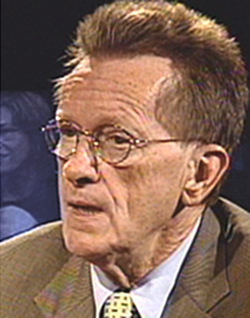
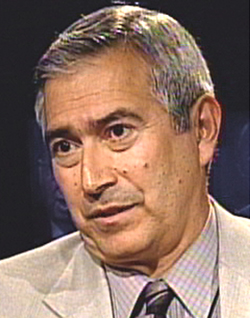
Strickland: It really has grown a lot, and it continues to grow. As you know, our whole area is growing because more and more people want to come out and live here. As long as that happens, it's going to grow. And you really can't judge it. Actually we really do a lot of demographic work and we try to track it, but every year it's like a new experience, how many students we have.
We're so thankful and grateful to the citizens of this community that they passed that bond and we were able to build these schools. That was the important part. (Also), we're so happy that we have a new superintendent. I am proud that he is our superintendent. We've made a great choice. He hit the ground running. We immediately started three things: We're trying to improve our achievement gap, we're improving literacy, and we're also (putting) a great focus on ... customer service.
Signal: (To Castellanos) You came here from Orange County, right?
Castellanos: That's correct.
Signal: Was the district roughly the same size as Hart?
Castellanos: Newport Mesa Unified is where I came from. It was a K-12 district, which is different. This is a 7-12 district, a union high school district, so (there's) a little bit of a difference. There is elementary. There were about 23,000 students there, about the same size. I would say, demographically, it had certainly more of a Hispanic group. I think there it was 38 percent, and here, we're roughly 18 to 20 percent, give or take. That was probably the major difference.
Newport Beach, Corona Del Mar and Costa Mesa were the three cities served by the district. There was high wealth on one side of town, and poverty on the other side of town. So there were some different demographics from that standpoint, as well.
Signal: We've got some more affluent areas and less affluent areas here; when you're trying to figure out school attendance boundaries, do you try to take some from the affluent areas and some from impoverished areas and put them together on a campus? Is that a goal?
Castellanos: Typically with boundaries, you have to look at different criteria. One is obviously a balance in terms of ethnicity. You have to also look for transportation issues, how far students will have to travel. And yes, you do have to look at socioeconomic status. That's part of what you look at. And then, as you look at these different factors, you try to make the best decisions that you can. That's why I think it's important to have the community involved, those places that will be affected by it. Whether you have the affluence or you don't have the affluence, I think you have to look at those factors, but make sure as much as possible that those affected by the decision will be involved in that committee.
But also keep in mind, no matter what kind of decision you make with boundaries — I have been through plenty in my career — you never have everybody happy with it, unfortunately. I wish I could say you do.
Signal: How hard has it been to get the community involved? We hear things like, back-to-school nights are suffering from low parent attendance. Is that the case? Or are people stepping up to the plate and getting involved?
Castellanos: My experience, in the short time I have been here, has actually been the opposite. I have seen a lot more people now expected to be at the open houses.
I was just talking to a group of parents this afternoon during lunch, and I said, when I was in Orange County, I thought the level of involvement there was probably as good as it gets. But actually, when I got here, it's at another level — a much higher level. It is broader based. It's not the same, small group of people always being involved. It's much broader based. I think that's a difference. I tend to see more people involved here in open houses and other activities that I have seen in other districts.
Strickland: A lot of people know — and they expect — that when kids go from elementary school to junior high and high school, there is less parental involvement. It's sort of a natural thing.
But our district has so many programs that are really long-term programs. For instance, many kids who enter high school get involved in — Hart High School has a Show Choir. That's 150 to 200 kids. That's a four-year program. So from the beginning to the end, those parents are totally involved. We have a great sports program, as you know. Our athletic teams — they win state championships. You can't beat that.
Signal: Now they are going to be their own league.
Strickland: Exactly. We're having our own league. And I think there is a lot more parental involvement in our particular district, as you (Castellanos) were saying, than in most. I think it's increasing.
We have now also a new focus on partnerships with parents, involving them to achieve student success. Four of the five board members have gone back to Johns Hopkins programming, learning about this, something Jaime is instituting throughout the district with administration, with parents, with students, more involvement with the business community. It's a joint effort. That will bring more and more parents out. I'm sure of that.
Signal: You mentioned the growth you've seen. A big thing that brings people to Santa Clarita is the perception of safe streets and good schools. How do our test scores stack up against the rest of the state?
Castellanos: I was reviewing the school accountably report cards just yesterday. They're really very good, as you look at not at only L.A. County, but across the state.
As a district, right now we're at about 767, which is our API, the Academic Progress Index, which is what the state of California measures us by. Obviously 800 is that magic number; if you're 800 or above, you're doing outstanding. So we're trying to get it up to that 800 for all our schools. But that will take time.
By and large, I think we have right now four schools, if I remember correctly, above 800; a lot (are) knocking on the door in the high 700s, and I think our lowest school right now is at about 647. We're working on getting that up, of course. But I think overall, as you said earlier, that's what I've heard, too, as I've talked to different people in the community at various meetings that I go to: They're here because of what they consider to be a safe community and good schools.
Signal: Do you know if the Hart district ranks in the top 10 or 20 percent in the state?
Castellanos: It's hard to say, because they don't do it that way. They do have an indicator that's called a "similar schools" ranking, on a scale with 10 the highest and 1 the lowest. Depending on each school, its demographic background, its socioeconomic status and other indicators, it can fall somewhere within that 1-10 range. So it's hard to give you an indication of whether they're in the top 10 percent, because the state really doesn't do it that way — nor does the No Child Left Behind legislation. It doesn't rank them.
Signal: In terms of No Child Left Behind, the complaint we hear is that English language learners and special education students are expected to meet the same high academic standards as the "mainstream" kids. Are you taking steps to help the English language learners and special education kids meet those goals?
Castellanos: Absolutely. And that's, of course, a challenge. When you're not a native speaker of English and you take these exams, it's much more difficult. But the way NCLB works, in a nutshell, is that in English language arts and mathematics, there are certain percentages of students who have to be in the "proficient" to "advanced" levels, which are the two highest levels. Every two years or so, they are raising that bar. In fact, after the testing cycle that we (just) started today, the following year we'll be up to, I think, 34 percent for language arts and about 32 percent for math. So you can see the bar is being raised — until 2014, when the government expects every kid to be "advanced proficient."
Not to sound doom-and-gloom, but that's going to be a very difficult thing if we reach that at all, because there are too many factors that we can't control in terms of language, home environments, that type of thing. However, we're doing a lot with staff development, in terms of training teachers to use different methodologies in the classroom.
We're having what we call parallel courses in math and English. That means that a student will have to give up an elective to take their algebra class, for example, and have a support class for algebra during the school day — because it's hard to get kids to come before school, lunch or after school, because they're involved in so many other things.
We're also looking at making sure we have enough sections for our English language learner kids. In other words, if we have 400 kids, we need to have the corresponding sections in science, math, history and English to meet their needs. We're doing a lot of different things like that, but it's a challenge.
Signal: A year ago there were allegations of racism at Valencia High School. The district responded by forming an ad-hoc committee. It made some recommendations, which the board has adopted. Tell us about that.
Strickland: We adopted all of them, actually. I think there are 25 or 26 (recommendations), depending on how you read it. We've started already on 12 of them. Our new diversity coordinator, Greg Lee, has instituted those.
Gloria Mercado and I were the board members who were on the ad-hoc committee. We spent hours — I think they figured it was thousands of hours, total, that people spent actually working on that. We came up with these ideas and they were all adopted.
Signal: What are some of the approaches?
Strickland: First of all, we have a diversity coordinator. That will mean that in schools, we will also have a counselor, and the way it is set up now, there will be counselors who will be in charge of that. There will be ways students can report incidents (anonymously), without being afraid to do that.
Castellanos: Actually, what it is, we stay away from the designation "counselor"; it's actually a diversity liaison. In some cases it is a counselor; in other cases it is a teacher or classified staff (member who) has a real interest and training in that area.
Every school right now has a point of contact with the district. In some cases, there are small committees being formed with five or six people taking it on. It's actually what we call a diversity liaison at each of the sites. That's in place.
Signal: What is the policy today if a student goes to a teacher, administrator or any other staff member and says, "So-and-so called me the N-word?" What happens?
Castellanos: One of the three directives that the board gave the ad-hoc committee was to take all our policies that involve hate incidents, racial issues, bullying and intimidation, and put those all together on a separate sheet of paper that was sent home in the summer mailing. This year we didn't get to it in time, so we sent it just after school opened up. But in there, we want to make sure the parents and the students understood that we do have policies.
What has changed since (a year ago) is the fact there is a greater awareness of these issues. To use an example: When a kid calls a kid the N-word or the B-word or whatever word they use on the campus, it really depends on the facts. Just because that was used, I don't want to assume that automatically "this" will happen. It could (result in) anything from just a conversation, to a parent conference, all the way to possibly expulsion. It really depends on the facts that surround that. Was it an N-word coupled with some physical altercation? With a fight or an assault? Certainly that's different.
Signal: You're taking into consideration how the word is used?
Castellanos: Well, first of all, it is unacceptable to use the word. I'll say that flat-out.
I believe there should be at least something done to the student, if nothing more than just talking to the kid. But the parents to be informed that (the word) was used, as well, and maybe they will take some minor disciplin(ary action). But that word is unacceptable.
But again, it depends on the facts. I can't give a set formula for every time a racial epithet is thrown out there. But it's unacceptable. The kids need to understand it, the staff, the administrators, and we need to deal with it. That's the bottom line. You don't turn your back and let it go and say it's OK, because it's not.
Signal: Does it seem to be a bigger or lesser problem than a year ago?
Strickland: I don't really think there is a difference — it's is just my opinion — (from) a year ago until now. I think the kids actually see things much differently than parents do. The way that they talk to each other—
Signal: Really? Kids see things differently than parents?
Strickland: Well, it's always been that way — and it still is that way. There are words that kids say to each other that will be extremely offensive to a certain kid, which will not be offensive to another kid. That's the way I think it's always been, and I think it still is that way.
Castellanos: What I would add to that is that I think we have to be honest about it. These things happen on our campuses. They happen — more often than not, it's kids who use this kind of language. However, I think you have to make sure you have a culture within your school that it's not acceptable. When something happens, there has to be something done about it. I think we have to be honest with ourselves that these things do happen. We don't like it. You can't control everything a kid does or everything a kid says, but when it does happen, you have to give it immediate attention and basically drop what you're doing and deal with it. Otherwise it gets worse instead of better.
Signal: Will the Hart district declare a school holiday for the Jewish High Holy Days?
Strickland: There were number of things that happened with that (suggestion). The first thing we have done is, this particular year that's coming up, the High Holy Days will be taken as holidays, because they fall in the holiday mode. But that does not necessarily mean that they will always be given off.
Castellanos: I think there is a misconception, perhaps, in the community, that the district has total control — or any control whatsoever — over the holidays and the calendar. It's a negotiated item, meaning that the union and the district management, who represents the district, have to negotiate that. They both have to agree to it.
Since we do it on a yearly basis, it could change. For the 2006-07 calendar, for example, I think it's Oct. 2 and 3, which is when Rosh Hashanah — two of the three or four days — fall there; those days will be off. But in terms of Yom Kippur, which occurs I think Friday evening into that weekend, it won't be necessary to do it at that time.
Well, what happens in the 2007-08 school year is up for grabs. That's why I was real careful that night that our Jewish parents and students came to speak to the board. I cautioned, I said, understand that this isn't a done deal for the future. Every year it's going to be renegotiated; it may be "in" one year and "out" another. It really depends on both sides, in terms of what they agree to.
Signal: Both sides being the district and the teachers?
Castellanos: It would be the Teachers Association and the district management, typically our personal department that actually does the bargaining for us as a district.
Strickland: Just to clarify a point, as a board member, as a candidate running for the school board, I clearly have my own thoughts about that. But once again, it's not just entirely up to me. It's not entirely up to the board how that's done, because it is a union issue. My feelings are that (the High) Holy Days should be holidays. But that's my opinion.
Signal: Is Christmas open to negotiation with the union?
Castellanos: Yes, it is. And that's one of the issues I think the Jewish families have brought up, too: You take Christian holidays off, but how come we can't have the Jewish holidays? They make a good point.
But the whole calendar is up for negotiation. I believe this last year, we got out for the Christmas vacation on Dec. 16, I think it was. Well, for the 2006-07 school year, this coming December, it's going to be Dec. 21, which moves it a little bit closer to Christmas. But typically that's what you will see with a traditional calendar, where you start in September and get out in June.
Strickland: But Christmas has always been a day that's off.
Castellanos: But to answer your question: Yes, the whole calendar is up for negotiation every year.
Signal: The fight at Golden Valley High School in late February has been characterized a number of different ways. Maybe it was racially motivated, maybe it was gang-related, maybe it wasn't. What started it?
Castellanos: There were some events that led up to it before the actual event happened. There were some things that happened off campus. I don't know if it was at a party or where it was, but definitely after talking to some of the people involved, it was definitely off campus. It was brought back onto the campus a few days before the fight erupted, and there were some words exchanged, broken up by a teacher, and there was another incident right after that, like a day or two before, that was actually broken up by staff.
And then, of course, we had the fight —ÝI think it was a Friday. From what I have been able to determine by talking to people involved, we probably had 15 to 20 kids involved in that. And the school kind of went into a lockdown mode, which means they rang the lunch bell early, got the kids into class to clear it out, to get order back onto the campus.
Of course you know we had the issue with the press, as well. I guess there are two different things I heard — they were permitted to be on (campus) at one point, but then asked to go off; another thing I heard was that they were actually asked to wait at the gate with the parents. So that became an issue, obviously, between The Signal and the school district.
That's kind of what happened in terms of the facts as I understand them, in talking to people who actually participated in the fight and some of the administrators and some parents.
Signal: Was there anything the school could have done to try to prevent it, or lessons learned out of it?
Castellanos: I would say both. I know there were a couple of incidents that flared up before the fight happened on that Friday, and I know the administration brought students in and actually contacted some of parents about what had happened. I think they tried to intervene at that point in time.
But what happened — I cant get into specifics of it, because I cant breach student confidentiality — but what happened is that a group of kids from one area of the campus went over to another group of kids and confronted that same group that they had issues with. Any time you do that on a campus, you're asking for a problem to happen. And that's what basically happened as a result of it.
After that, I did sit down and brief with the principal of the school, and also we had an AdCo, which is our administrative council, which is composed of all of our principals in the (district), and we talked about it. We talked about what went well with it, what we might be able to do better; we talked about issues of communication; we talked about issues with the press, and what we learned from that; those types of things.
We always — at least, that's my policy — you debrief after something like that has happened so you can see what went well and what we can learn from it.
Signal: Were some of these kids transferred to other schools?
Castellanos: Yes, sir. That's correct.
Signal: Golden Valley was essentially "born" in a populated area. It combined longtime rivals onto one campus — kids who would otherwise go to Hart and kids who would otherwise go to Canyon. Does Golden Valley have greater problems than other campuses?
Castellanos: After the fight happened, I sent Greg Lee, our diversity coordinator, onto the campus, and I had him meet with kids. Because having been an assistant principal at Placerita, Greg Lee knew a lot of the kids. He pretty much knew who could give him a straight story and who would kind of embellish it. He talked to a number of kids, because I wanted to get a assessment: Were there things under the surface that we needed to address?
He felt that after talking to kids, that this fight was a thing that had a couple of isolated things happen before it happened. He did not feel, in his assessment, talking with students and some teachers there, that there were major problems under the surface.
I do realize that we have had a number of transfers out of the school there for athletic reasons and other reasons, and my only hope again is ... we really need to keep a perspective on it. We have a school that's three years old, that's trying to establish a identity, and yes, it has a mix of students from different ethnic groups and it doesn't have, I would say, that high socioeconomic level to it at this point in time yet. Hopefully that will come in the future as Fair Oaks is built out, and so on.
I think we need to give the school an opportunity to develop itself. Because Valencia was born, and when Hart was born and Saugus and all those schools, they went through a lot of growing pains, too. Maybe not the same exact ones as Golden Valley's, but I have no problem with what the school is trying to do. It's going to take time to establish an identity.
You hit it on the head. You have one class, which I believe is the juniors, who in essence were forced to go there when they were actually going to other schools. So that's a bit of a problem. As they leave and graduate and you have that constant flow of consistency from La Mesa (Junior High) to Golden Valley, I think things will get better and better for them.
I just wanted to let people know that I do believe Golden Valley is a good school. Yes, they have some issues like everybody else does, and we need to acknowledge them and deal with them. But people leaving the school for whatever reasons — I think sometimes this is opportunistic for people. When something like this happens, they see something is wrong with the school; this proves it; now were moving on. I don't know how fair that is.
Signal: It will take some years for Golden Valley to establish itself as its own school community.
Strickland: That was another issue, when you were talking about kids leaving school, that was entirely another issue than what your initial question was about. It just happened, unfortunately for Golden Valley, that they were back-to-back in the eyes of the community. But again, I think the long-term plan for those boundaries for Golden Valley was that yes, there will be a socioeconomic balance. But short-term, it clearly had no real great socioeconomic high-end balance when it was established.
Signal: Do you foresee Sand Canyon being brought in to the Golden Valley attendance area?
Strickland: You know what? We don't really know what will happen with boundaries. It depends on where people move, how large our growth is, whether or not there will be a new school — for instance up Sierra Highway, which would then probably take Sand Canyon and all the east side into another realm there.
There are so many changes that could happen. All I know is that more and more people come out here; they want to live here; we have a great place to live. This is one of the largest areas outside of a metropolitan area in which people send their kids to public school, and we're so proud of that and so happy about that, that we are doing whatever we can to maintain that...
Signal: You mentioned the great sports teams. What is the district's policy on transferring for athletic reasons?
Castellanos: We don't allow it. But what happens is, if parents make a physical move from one side of town, let's say from the Canyon area into the Hart (area) and make that physical move, they have a right to go ahead—
Strickland: If it's real.
Castellanos: If it's real. I will use an example: A while back when the paper had three players from Golden Valley, we have checked two out physically with our resource officer and a person from the school to which that student is going. In two (cases), we have determined that they are physically living there. And there's the other one where it still has not transpired.
Strickland: (It) goes even further. There are cases — for instance, if there's a student who is living, say, with his grandparents, and that is where he is living, if he moves to an area — if his grandparents are no longer his caretakers and someone else is his caretaker, then there is another problem.
Signal: The next time your students want to march for immigration or anything else, are you going to keep them on campus?
Castellanos: We will do our best. But one thing I told the administrators not to do is, you don't lock gates. Because now you have a fire exit problem. And No. 2, you don't go ahead and grab kids by the arm or physically hold them in.
We will tell the kids what their limits and the parameters are. If they choose to climb a fence or walk through a gate, no, I'm not going to physically stop them. I will be real honest about that. But they need to know there will be a consequence upon their return to school. There has to be.
Strickland: They also need to really, fully understand — well, No. 1, that this is a democracy, and we're so proud that it is — but they need to understand the issues before they go off and start marching anywhere.
Signal: Are you confident that the teachers will teach them what those issues really are?
Strickland: I am confident that they will.
Signal: When is Castaic High School going to open?
Castellanos: That's a great question. It's a flip of a coin. Right now it's tentatively set to open the fall of 2009, but we are having a problem right now with our (environmental impact report) in terms of the county. We're working through that. So it may be the fall of 2010. I really don't know yet.
Signal: Is Castaic still the next one? Or will another one open before 2010?
Castellanos: No, Castaic is our next one.
Strickland: When I was elected to the board the first time, we were talking about 2007. Now we're talking about '09 or '10. We're doing our best.
See this interview in its entirety today at 8:30 a.m., and watch for another "Newsmaker of the Week" on Wednesday at 9:30 p.m. on SCVTV Channel 20, available to Comcast and Time Warner Cable subscribers throughout the Santa Clarita Valley.