|
|

|
After Mexico won its war for independence against Spain, Antonio was assigned to inventory former mission properties. He quit the army and petitioned Gov. Juan B. Alvarado to grant him some of the mission property: the 48,829-acre Rancho San Francisco, consisting of the western Santa Clarita Valley and portions of Ventura County easterly to the Piru area. Antonio took formal possession on Jan. 22, 1839 (although it may have been considered "his" as early as 1824) and became one of fewer than 400 private landowners in California. Antonio moved his new family (he remarried, to the much younger Jacoba Feliz) moved into the rancho, where he lived until his death on June 21, 1841. With a widow and eight children to battle over the estate, Antonio, on his deathbed, dispatched a message to his number-one son, Ygnacio, offering him various properties including the Rancho San Francisco. Before Ygnacio could reply, Antonio died without having left a will. Jacoba married José Salazár and sued; a judge awarded awarded 13,599 acres to Ygnacio (the westernmost section), 21,307 acres to Jacoba and 4,684 acres to each of Jacoba's six children. Although he occasionally visited, it was 1861 before Ygnacio would move permanently into the adobe home on his property (the section known as Camulos, near Piru along today's State Route 126, about 10 miles west of Interstate 5). Instead, Ygnacio lived at Los Angeles, where he was mayor. Acutally, Ygnacio was a California state legislator, too: When statehood came in 1850, Ygnacio served a short stint in the first Legislature. But this was just a part-time job at the time, and most landowners didn't stick it out for more than a year or two. Ygnacio's real interests lay in Los Angeles. Ygnacio's tenure at the helm of Los Angeles may best be remembered for his attempt to clean up the city. In the early 1850s,Ygnacio formed the California Rangers. Headed by Major Horace Bell, the captains were William W. Jenkins (who would later own a large ranch in Castaic); William Reader, and Cyrus Lyon (twin brother of Sanford, an early Newhall entrepreneur. For these two would Lyons Avenue be named — although misspelled). The Rangers cleaned up, all right, meting out frontier justice (constitutional rights and probable cause be damned) so effectively that in two years the Rangers disbanded. Back at the ranch, things weren't going so well. Flooding ravaged the ranches of Southern California ranchers in the late 1850s and early '60s; cattle died, and ranchers mortgaged their properties to the hilt. William Wolfskill held the paper to the properties owned by Jacoba Feliz and José Salazár. In 1861 Wolfskill cut a deal with Ygnacio that paid off the Salazár's debts and gave Ygnacio the western five-elevenths of the Rancho San Francisco. Gen. Edward F. Beale had already picked up the deed to Rancho Tejon to satisfy some of the Del Valle creditors. But the reprieve was short-lived. Drought came in 1862 and would last three years. Most of the cattle died, and again the Rancho San Francisco was deep in debt. Ygnacio lost the ranch to his financiers, who sold it to some oil speculators. They didn't find what they were looking for (oil wasn't discovered on the ranch until 1933), and after changing hands a few times, the land ultimately went in 1875 to an auctioneer-turned-railroad tycoon from San Francisco ... named Henry Mayo Newhall.
City of Los Angeles City Council: Member Vaccination Committee: Member Health Committee: Member Land and Lots Committee: Member Canal Improvement And Repairs Committee: Member Investigation Committee (Water Claims): Member Examination Committee: Member City of Los Angeles (Appointed): Election Inspector City Council: Member Streets Committee: Member Lands Committee: Member Police Committee: Member Legal Investigation Committee (Of city's contract with Mr. Brent): Member City Square Improvement Committee: Member |
• C. Rasmussen Story
Ygnacio Family Tree
Ygnacio 1808-1880
Family History: Del Castillo 1980
Del Valle Branding Iron, RSF 1830s-40s x5
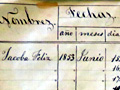
Livestock Ledger 1853
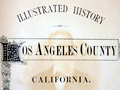
History of Ownership
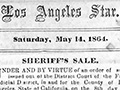
Wolfskill Foreclosure 1864
Labor Records
1919-1924
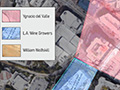
Ygnacio's L.A. Property 1871
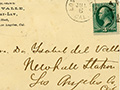
Envelope: Reginaldo to Ysabel 1877–1883
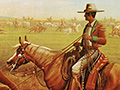
James Walker Art
(1818-1889)
Ygnacio Bio 1889
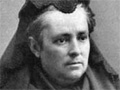
Ysabel 1837-1905
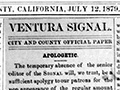
Description 1879
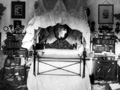
Bedroom ~1890
Reginaldo Nominated Lt.Gov. 1890
Pico Oil Connection
Probate Filing, Death of Juventino, 1919
Reginaldo 1854/1938
Reginaldo Bio 1889
Lucretia 1892/1972 (Multiple Entries)
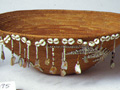
Nor. Cal. Basket mid-1800s
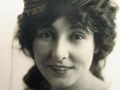
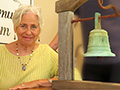
Bell, Portrait Come Home 10/28/2017
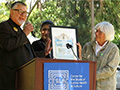
Reginaldo Recognized at UCLA 5/24/2019
|
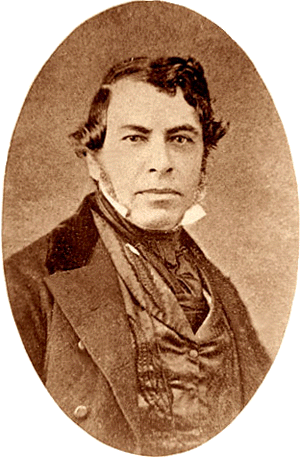 Ygnacio Ramón de Jesus del Valle (sometimes spelled Ignacio) was born July 1, 1808 in Jalisco, Mexico, to Lt. Antonio Seferino del Valle and María Josepha (Carillo) del Valle. In March 1828, Ygnacio was commissioned as a second lieutenant in the Mexican Army and rose to the rank of captain in command of the presidio at San Diego and chief customs house officer. Antonio was at Monterey; in a power play between their commanders in 1832, the two lieutenants Del Valle faced each other. Ygnacio won, and father and son would never speak to each other again.
The site owner makes no assertions as to ownership of any original copyrights to digitized images. However, these images are intended for Personal or Research use only. Any other kind of use, including but not limited to commercial or scholarly publication in any medium or format, public exhibition, or use online or in a web site, may be subject to additional restrictions including but not limited to the copyrights held by parties other than the site owner. USERS ARE SOLELY RESPONSIBLE for determining the existence of such rights and for obtaining any permissions and/or paying associated fees necessary for the proposed use.
